Dating platform owners tend to add subscriptions, message credits and virtual gifts one at a time, often because a competitor has all three or a vocal user asked for one of them. The result is usually three systems that were never designed to work together. Users get confused about what they already paid for, support queues fill up with "why was I charged twice" tickets that were never actually double charges, and the product team ends up patching rules on top of rules.
None of these three tools is inherently good or bad. Problems start when they compete for the same job instead of each doing a distinct one. This piece works through how to think about combining dating subscriptions, message credits and virtual gifts so the system stays understandable for users and manageable for the people running it.
Give Each Monetization Model a Different Job
The simplest way to stop three payment systems from fighting each other is to give each one a clear and different purpose.
Subscriptions: ongoing access. A subscription works best when it unlocks a capability rather than a single action. Advanced search filters, seeing who liked a profile, unlimited swipes and an ad-free experience all fit this job well. The user pays for the state of having access, not for doing something specific with it.
Message credits: usage-based interaction. Credits suit actions a platform wants to meter, such as opening a conversation with someone new or sending a message before a match exists. A credit gets spent when something happens, not simply because time has passed.
Virtual gifts: optional expression. Gifts are not really about access or interaction at all. They let a user say "I noticed you" or "I'm interested" in a way that costs a small amount of money and carries some social weight. Nobody strictly needs a gift to use the platform, and that is the point.
Giving each mechanism its own job does not mean the three can never overlap. It means overlap should be a deliberate design choice, not an accident of bolting systems together over time.
Think in Three Layers: Access, Interaction and Expression
A useful mental model is to picture the platform in three layers: access at the bottom, interaction in the middle, expression on top. A subscriber has broad access. Within that access, some actions still cost credits because they are resource-intensive or because the platform wants to slow down spam. On top of both, gifts let anyone add a personal touch regardless of which access tier they are on.
This is a starting point, not a rule every platform must follow exactly. A niche matchmaking site aimed at busy professionals might fold almost everything into one flat subscription and skip credits entirely, because its users want simplicity more than granular pricing. A casual, high-volume app might lean harder on credits because most users never intend to pay monthly at all.
Should Subscribers Still Need Message Credits?
This question comes up on nearly every project, and there is no single correct answer. Three common patterns exist, each with real trade-offs.
Messaging fully included. This feels the most generous and is easiest to explain. The risk is that it can undercharge heavy users, since someone sending five hundred messages a month costs more in infrastructure and moderation than someone sending five.
Messaging capped, with credits covering overflow. Subscribers get a reasonable included allowance, and extra volume draws from credits. This protects margins on heavy usage without punishing typical behavior, though it adds a small amount of complexity worth communicating clearly.
Messaging excluded, credits required regardless of tier. Here the subscription pays for visibility and discovery, while every message costs a credit. This can work where messaging genuinely drives costs, such as translation or heavy moderation, but risks feeling like a second toll after the user already paid once.
The right choice depends on what the subscription is sold as. If it is marketed as "everything you need to talk to people," credits on top will feel like a bait and switch. If it is marketed as "premium visibility and discovery," a credit cost for the conversations themselves is much easier to accept.
Keep Credit Systems Simple and Transparent
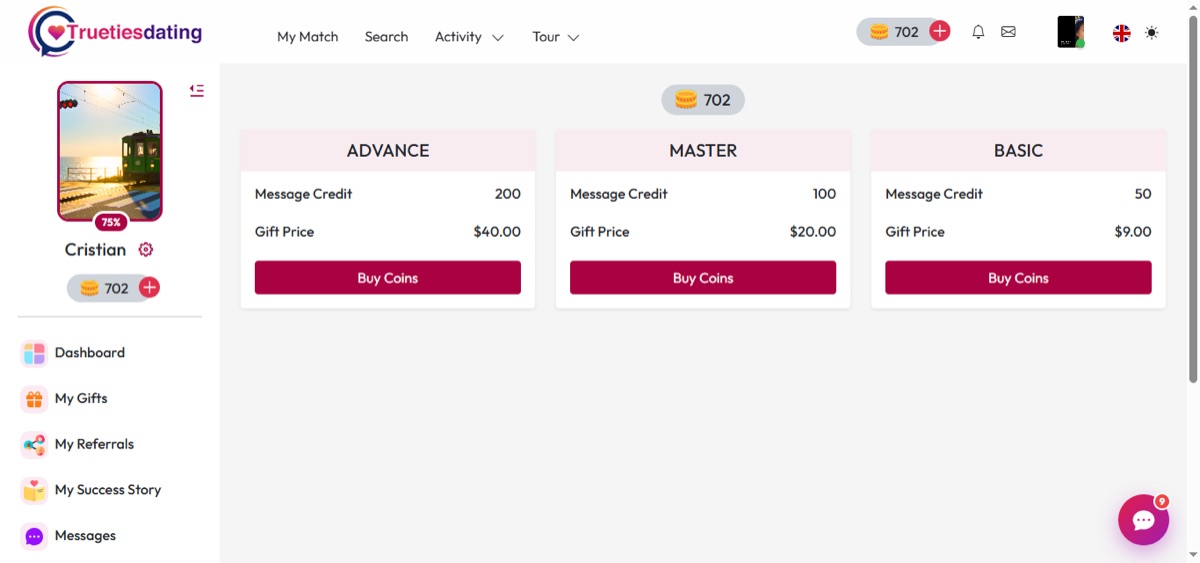
Credit systems fail users when they multiply. A platform with message credits, boost credits, super-like credits and gift credits, each at a different exchange rate, forces users to do math before every action. A single universal credit spent at clearly labeled rates is almost always easier to understand and support.
Pricing should be visible before the action, not discovered afterward. If messaging someone new costs five credits, that number belongs on the message composer, not buried in a help article. Bundle pricing, such as five hundred credits for less than the per-credit rate of a fifty-credit pack, is fine and expected, but the base rate for each action needs to stay easy to find.
Decide How Credit Expiration Should Work
Expiration is one of the more contentious details in a credit system, and it is worth treating purchased and promotional credits differently.
Credits a user paid real money for should either not expire, or expire only after a long window, such as twelve months of inactivity. Letting paid credits vanish quickly damages trust out of proportion to the revenue it protects.
Promotional or bonus credits, given as a sign-up incentive or loyalty reward, can reasonably expire faster since they were never paid for directly. When credits do expire, the platform should say so at the moment they are granted, such as “these 50 bonus credits expire in 30 days,” send a reminder before the deadline, and never let a balance silently disappear. A user warned twice who simply didn't act is far less likely to leave a negative review than one who logs in to find their balance gone with no explanation.
Where Virtual Gifts Fit
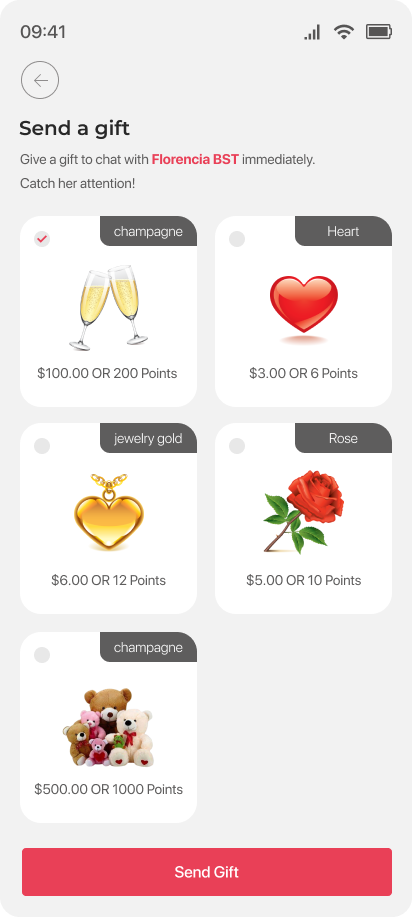
Gifts work best as an addition to a conversation that is already happening, not as a replacement for one. Letting a user send a gift alongside or instead of a first message, when they are not ready to fully commit to a conversation, can lower the barrier to making contact.
Whether gifts should be available to non-subscribers is worth deciding deliberately. Allowing it widens the audience of paying users and can act as a soft on-ramp toward a full subscription later. Restricting gifts to subscribers only simplifies the system but shuts out users who might have paid for a single gift without ever wanting an ongoing plan.
Build the Payment Journey Around User Intent
Three hypothetical users illustrate how differently people approach the same platform. None of this represents measured behavior; they are simple illustrations.
User A, a regular premium user, browses profiles often, wants advanced discovery features, and subscribes for that ongoing access. Occasionally they buy a small credit pack when they want to message someone outside their usual match volume.
User B, an occasional communicator, has no interest in a monthly subscription but is happy to buy a one-time pack of credits the moment they find someone worth messaging. Forcing this person into a subscription just to send one message is likely to lose them entirely.
User C, an expressive user, already has an ongoing conversation and wants to send a virtual gift purely as a gesture, with no plan to change their access level at all.
A platform that only supports one of these journeys is leaving money and goodwill on the table. Designing the payment options around what each person is actually trying to do, rather than forcing everyone through the same funnel, is what makes a hybrid model worth the added complexity.
Avoid Charging Twice for the Same Value
The fastest way to erode trust in a monetization system is to make a paying user feel charged twice for the same thing. This usually happens unintentionally, when a subscription is marketed as including a feature that credits are still deducted for behind the scenes.
A common failure case: a plan advertises “unlimited messaging,” but a backend rule still deducts credits for messages sent to unmatched users, and nobody clarified the distinction in the plan description. The user reads “unlimited,” gets charged, and files a ticket that one clearer sentence in the pricing table could have prevented. Whenever a subscription and a credit rule could plausibly overlap, the plan description needs to spell out exactly which situations are covered.
Design the Free-to-Paid Journey Carefully
Free users need enough of the platform to understand its value before hitting a payment wall. A platform where every profile is blurred and every action is locked from the first session gives a new user no reason to trust that paying will be worth it.
A reasonable approach lets free users browse a meaningful number of profiles and understand roughly what premium unlocks, before any payment is requested. When a paid action does come up, the cost should be visible before the user commits to it, not after:
Credit balance: 240
This message: 5 credits
Remaining balance: 235
Showing this before the message sends, rather than only updating the balance afterward, removes the feeling of being surprised by a deduction. The same logic applies to gifts and any credit-based boost.
Give Administrators Control Over Monetization Rules
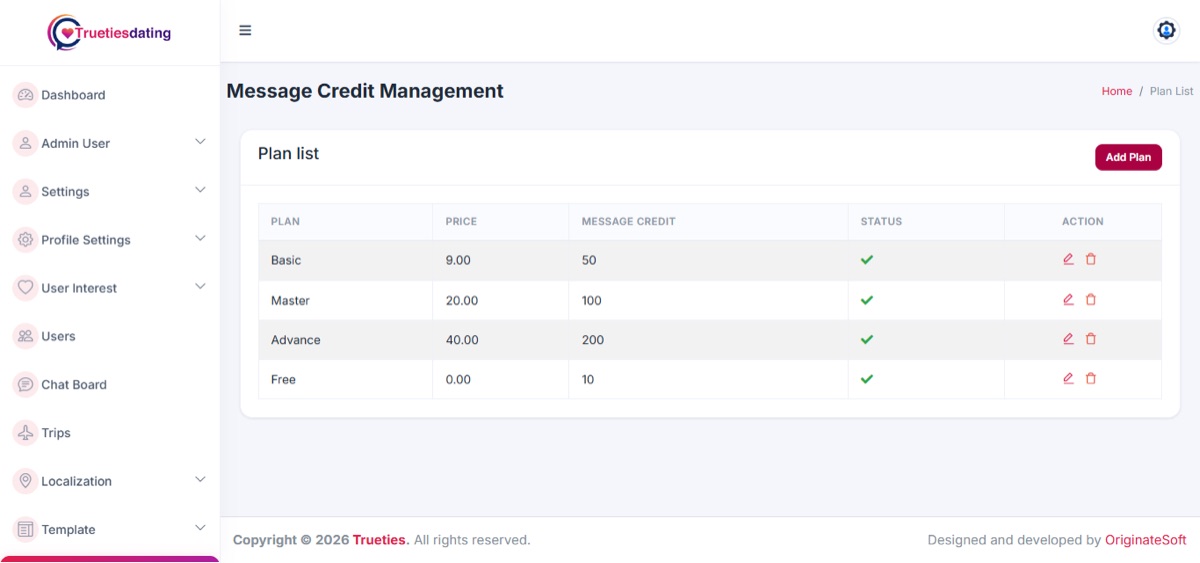
Monetization rules change more often than most teams expect. Prices get adjusted, new plans get tested, promotional campaigns come and go, and a gift catalogue needs new items for holidays or events. If every change requires a developer to edit and redeploy code, the business ends up slower than its pricing decisions actually need to be.
Wherever practical, the following should be configurable rather than hard-coded: subscription plans and their duration, subscription benefits, included credit allowances, credit package sizes and prices, the cost of each metered action, the gift catalogue and gift prices, promotional credit rules, expiration windows, and refund policy. This does not require a specific technical architecture, only recognizing that a monetization system tends to change shape faster than the codebase around it should have to.
Use a Transaction Ledger
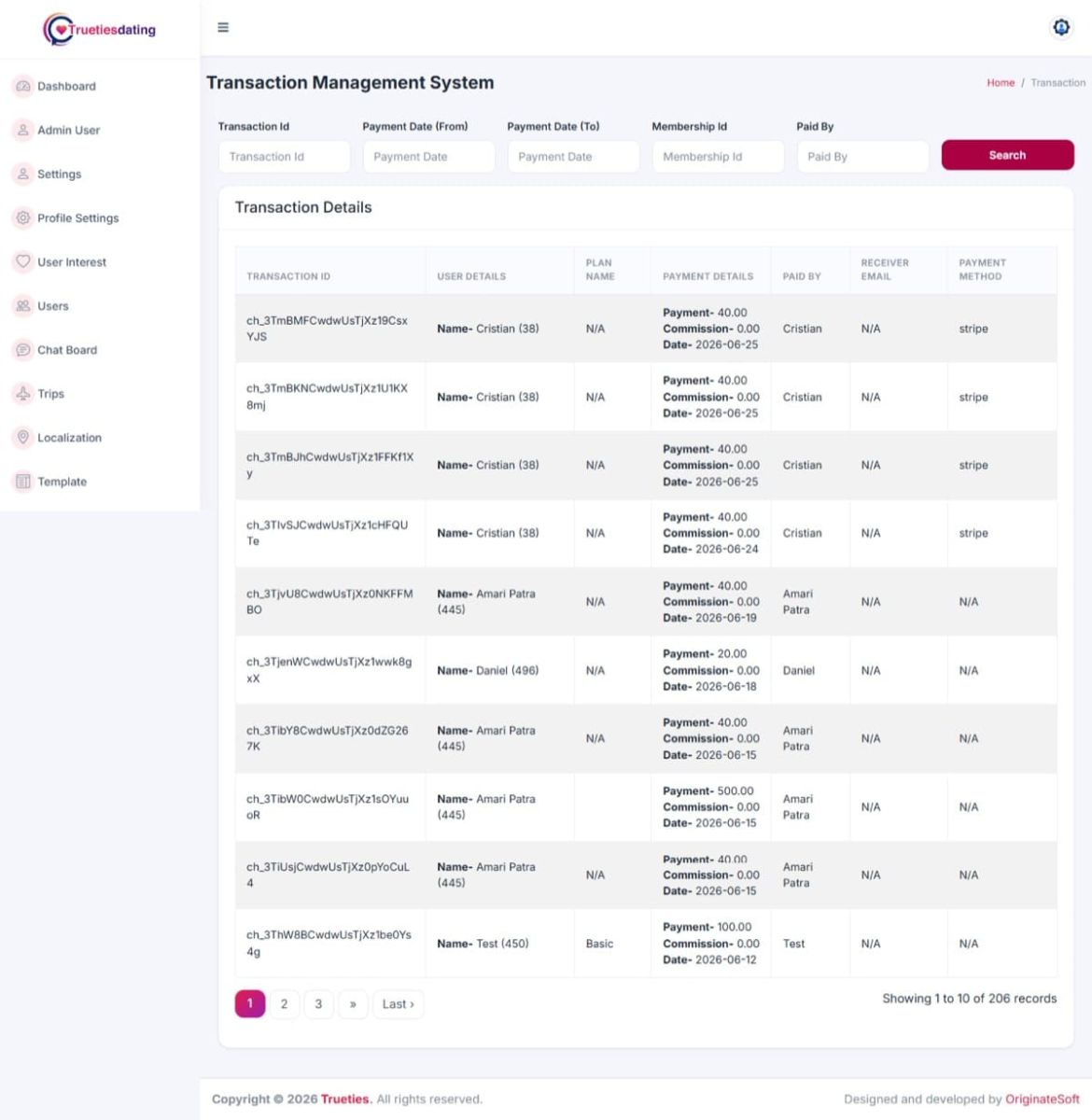
Showing a user only their current balance, such as "Balance: 240 credits," is rarely enough on its own. A visible transaction history answers the question a confused user actually has, which is "where did my credits go," rather than just “how many do I have left."
| Date |
Action |
Credits |
| Sep 7 |
Message sent |
-5 |
| Sep 7 |
Virtual gift |
-20 |
| Sep 6 |
Credit purchase |
+500 |
| Sep 5 |
Promotional bonus |
+50 |
A ledger like this benefits both sides of a support conversation. Users can self-serve an answer without opening a ticket, and support staff can resolve the tickets that do come in far faster, because the history is right there instead of scattered across separate logs.
Measure Product Health, Not Just Revenue
It is tempting to judge a monetization system purely by how much it brings in each month, but revenue alone hides whether the design is actually working for users.
For subscriptions, worth tracking includes trial-to-paid conversion, renewal rate, cancellation reasons, and average subscription duration. For credits, track purchase rate, average purchase size, how quickly credits get consumed after purchase, and how large unused balances tend to grow. For gifts, track purchase frequency, total gifts sent, and average gift value.
Broader product health metrics matter just as much: how often conversations actually start, response rates once they do, overall retention, refund requests, and payment-related complaints. A pricing change that lifts revenue this month while quietly increasing refund requests and lowering retention is not a win, even though the top-line number looks good in the short term.
Common Mistakes to Avoid
Making everything paid. This happens when a team assumes more paywalls automatically means more revenue. In practice it usually shrinks the pool of users who ever experience enough value to want more. Leave a genuinely useful free experience in place.
Hiding credit costs. Costs get hidden when a team worries showing the price upfront will scare users away from an action. It usually backfires, since a surprise deduction afterward causes more frustration than the price itself would have.
Charging twice for overlapping benefits. This is almost always an oversight from adding a credit rule after a subscription tier already existed, not a deliberate choice. Audit new subscription benefits against every existing credit rule before launch.
Making gifts effectively mandatory. If sending a gift becomes the only realistic way to get a response, the mechanism has stopped being optional expression and started functioning as a disguised message fee.
Overly complicated credit systems. Multiple credit types with different exchange rates usually come from adding features independently over time rather than planning the system as a whole. Consolidate to one credit type wherever the underlying actions allow it.
Poor transaction visibility. This typically happens when the balance ships before the history does, and the ledger never gets built afterward. Treat the ledger as part of the initial launch, not a later addition.
Excessive payment friction. Too many confirmation steps or unclear pricing screens are often the result of legal or finance requirements layered onto the UI without a design pass afterward.
Optimizing for immediate revenue over long-term engagement. Short-term pricing experiments sometimes get judged only on the following week's numbers. Pair every pricing test with a retention check before calling it a success.
A Simple Framework for Designing the System
| Monetization method |
Main purpose |
Typical user expectation |
Main risk |
| Subscription |
Ongoing access |
Predictable recurring value |
Overlapping benefits with other mechanisms |
| Message credits |
Usage-based interaction |
Pay only when needed |
Confusing or hidden costs |
| Virtual gifts |
Optional expression |
Small discretionary purchase |
Feeling unnecessary or manipulative |
Each row answers a different question a user might ask. Subscriptions answer "what do I get for paying regularly." Credits answer "what does this specific action cost me." Gifts answer "how can I show interest beyond a message." Keeping those three questions separate in the product design, even while the systems share a backend and a payment flow, is what keeps the whole thing from feeling like a maze to the person using it.
Conclusion
Subscriptions, message credits and virtual gifts each do their best work when given one clear job instead of competing to be the platform's only monetization tool. Access, interaction and expression are useful categories for thinking through where a new feature belongs, even when a specific platform ends up bending the framework to fit its own audience. The details that matter most in practice are the ones users actually see: whether a price is shown before they commit to it, whether their balance history is visible, and whether paying once for a benefit ever quietly gets charged again elsewhere in the system. Get those details right, and three monetization mechanisms can work as one coherent system instead of three separate ones competing for the same wallet.


