By Kaushik Sankar Das, Content Editor on Jul 16, 2026
Numbers like this rarely mean much until you sit with the founders who lived through each one. After watching well over 250 entrepreneurs build a dating website or app, patterns start repeating in ways that generic advice rarely captures.
Every founder walks in convinced their niche is different, and often it is. But the mistakes, the pivots, and the wins tend to rhyme across niche communities, matrimony platforms, and swipe-based apps alike. What separates the ones that survive their first year from the ones that quietly fold usually isn't the idea. It's execution.
This piece pulls together ten lessons drawn from real launches, not theory. Some will confirm what you already suspect. Others might change how you plan your first ninety days. Either way, the goal is to help you skip the expensive mistakes we've already watched play out more than once.
Lesson 1: Don't Build Every Feature at Launch
The founders who struggle most tend to share one habit: they try to launch with every feature they can imagine, from video calling to gamified rewards, before a single real user has tested the core idea.
Industry data backs this up. Lean MVPs with six to eight core features typically launch in three to four months, while teams chasing a full feature set often push their timeline past nine months, burning budget before they know if anyone wants the product.
What We Learned
Launching with fewer, high-quality features generally produces better early user engagement than trying to build everything at once. The founders who resist the urge to over-scope are usually the ones asking us for their second feature round within a few months, funded by early traction instead of guesswork.
When you build a dating website, the safer path is profiles, matching, chat, basic safety tools, and one simple monetization layer. Everything else can wait until real users tell you what they genuinely need.
Lesson 2: Your Niche Matters More Than Your Technology
Founders often assume the winning move is a smarter algorithm or a slicker tech stack. In practice, the platforms that grow fastest are the ones that pick a specific audience and build the entire experience around it.
The dating market is genuinely crowded, with thousands of apps competing for the same swipes. Yet niche and lifestyle-focused platforms now represent a growing share of new launches, largely because a defined audience is easier to reach, retain, and monetize than a broad, general one.
We've seen this play out again and again with niche dating platforms built for a specific community, whether that's a hobby group, a faith community, or a matrimony audience with its own cultural matching rules. Research also shows a large share of daters are open to trying new, smaller platforms, which leaves real room for a focused idea to grow.
Lesson 3: Trust and Safety Features Are Not Optional
Founders sometimes treat safety tools as something to add later, once the platform has traction. That order tends to backfire, because trust is what convinces a stranger to keep using an app built around meeting other strangers.
Reporting, blocking, and photo moderation need to exist from day one, not as an afterthought bolted on after the first bad experience gets shared publicly. A platform that handles this well earns word-of-mouth trust that paid marketing can't buy.
One founder who launched a niche platform with us put it simply: the software held up exactly as promised, and the team stayed responsive through the entire setup process. That kind of reliability, paired with built-in safety tools, is what keeps early users from bouncing after one bad experience.
To delve deeper into this topic, visit our blog: Trust and Safety Features Every Dating App Needs in 2026
Lesson 4: Monetization Should Be Planned Before Launch
Monetization is rarely the reason a launch fails outright, but poor timing around it quietly damages growth. Introduce payment prompts before users feel real value, and most won't complain. They'll simply leave without a word.
The founders who get this right tend to map out their dating business models before development even wraps up. Subscriptions, credits, boosts, and verification fees can all coexist, but each should be introduced only once users already see the platform delivering on its promise.
A simple rule works well here: let users match, chat, and feel the product's value first. Layer in monetization once that trust is established, not before.
Lesson 5: Mobile-First Wins
Across the platforms we've supported, the majority of daily activity happens on a phone, not a desktop browser. A dating website that treats mobile as a secondary experience is fighting against how people how people use these products day to day.
Industry research puts mobile usage well above seventy percent for dating platforms, with users preferring app-based matchmaking over browser sessions. Founders who design mobile-first from day one avoid a costly redesign once their user base has already formed habits around a clunky desktop layout.
This isn't only about having a native app available. It means the sign-up flow, photo uploads, chat, and notifications all need to feel natural on a small screen, since most first impressions of your platform will happen there, not on a laptop.
Lesson 6: Performance Impacts User Retention
A slow loading profile grid or a chat message that takes seconds to send feels minor in a demo, but it quietly erodes retention once real users are swiping through hundreds of profiles a week.
One founder behind a Tinder-style clone told us the platform performed well from day one, after comparing several other options before choosing to move forward. That first impression of speed and reliability carried directly into how confidently they could market the launch.
Performance issues rarely show up as complaints. They show up as quiet churn, users who simply stop opening the app. Treat load times and chat reliability as core product decisions, not backend details to fix later.
Lesson 7: Verification Builds Trust
Fake profiles remain one of the biggest reasons users abandon a dating platform. Concerns about AI-generated photos and bots have only grown, with a large share of users now saying they actively worry about running into fake accounts.
Verified profiles consistently see stronger engagement than unverified ones. Even a lightweight approach, email confirmation paired with photo review, signals to new users that the platform takes authenticity seriously without adding heavy friction to sign-up.
For higher-trust niches, such as matrimony platforms or paid communities, stronger identity checks are worth the extra sign-up friction. Users in those categories tend to value safety over speed.
Lesson 8: Marketing Starts Before Development Ends
Founders who wait until launch day to think about marketing usually face what's known in the industry as the empty room problem: a platform with no bugs and no users, because nobody built an audience before going live.
The founders who avoid this build a waitlist, seed a founding community, and line up content well before launch day. Choosing a platform that lets you launch in a matter of weeks instead of months gives that early marketing work more runway to convert into your first real users.
Marketing and development should run in parallel, not in sequence. By the time your platform is live, there should already be people waiting to try it.
Lesson 9: Analytics Drive Growth
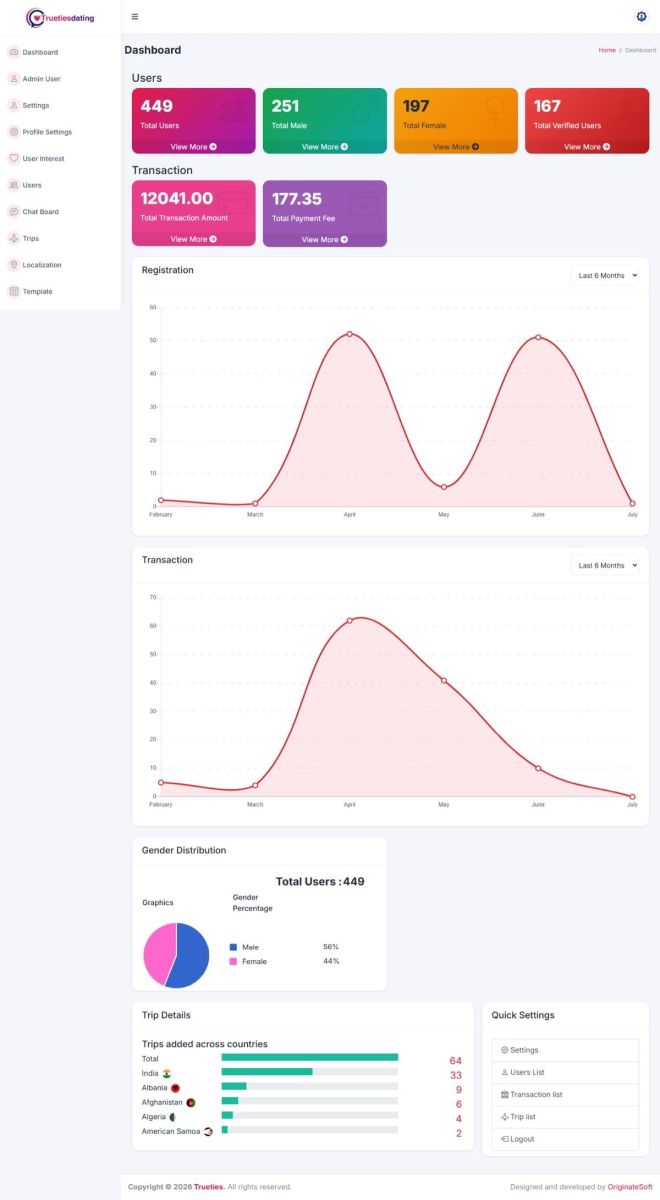
Founders who track match rates, message response times, and drop-off points from week one make faster, better decisions than those relying on gut feeling months into their launch.
An admin dashboard that surfaces this data in plain terms, not a raw database export, is worth prioritizing early. Knowing where users stall in the sign-up flow or why matches aren't converting to conversations tells you exactly what to fix next, instead of guessing.
Even a handful of core metrics, signups, match rate, and messages sent per active user, gives founders enough signal to prioritize the next few weeks of work instead of spreading effort across every idea on the roadmap at once.
Lesson 10: Continuous Updates Keep Users Engaged
A dating platform is never finished. The founders who keep users engaged over the long run treat launch day as the starting line, not the finish line, and keep shipping small improvements based on real feedback. This is also true of the feature set itself, which has shifted a great deal since we started in 2015.
Looking back at how dating app features have evolved across the platforms we've built over the years gives a useful sense of where the baseline keeps moving:
- 2015: Basic matching and profile browsing
- 2017: Native mobile apps become standard
- 2019: Push notifications for matches and messages
- 2021: In-app video calling
- 2023: AI-assisted matching suggestions
- 2026: Identity verification paired with AI-assisted moderation
This doesn't mean constant redesigns. It means fixing friction points, refreshing matching logic as your user base grows, and adding features users request rather than ones that sounded exciting during planning.
Conclusion:
Across more than 250 launches, the platforms that lasted shared a few habits: a tight MVP, a clear niche, safety built in from day one, and monetization introduced with patience rather than urgency.
None of these lessons depend on having a massive budget or a large team. They depend on sequencing decisions in the right order, and resisting the urge to build everything at once.
If you're planning your own launch, Best Dating Scripts has worked alongside founders through most of these patterns already, and is happy to talk through what applies to your specific idea before you write a single line of code.


