Search "dating app development cost" and you'll get a different number on nearly every page. $20,000 here, $200,000 there, sometimes $400,000 on the same list. That spread isn't dishonest; it's just incomplete. Most estimates assume a specific feature set, a specific team location, and a specific level of polish, without ever telling you which assumptions they're making. A founder comparing five quotes usually ends up comparing five different products, not five prices for the same one.
This report takes a different approach. Instead of throwing out one number, it pulls from years of conversations with founders who actually went through the process: the questions they asked before signing anything, the budget lines they didn't expect, and the decisions that ended up mattering more than the initial software quote. When a figure is genuinely published and verifiable, like market size or agency rate ranges, we've linked to it. When it's a pattern we've noticed across founder conversations and real implementations, we've said so plainly. It's a trend, not a guarantee.
Why We Created This Report
Founders working out their dating startup budget usually start with the wrong question. They ask, "What will the app cost?" when the better question is "What will it cost to actually launch and keep running?" After hundreds of founder conversations and years spent helping people build dating platforms, a few patterns kept showing up. People underestimate operational costs. They treat marketing like an afterthought. And they pick a tech stack because it sounds impressive, not because it fits where they actually are in the launch process. This report puts those lessons in one place so you don't have to learn them the hard way.
Executive Summary
There's no single split that works for every dating startup. A bootstrapped founder and a funded team spend money very differently. But across the projects we've worked on, a similar order of priority tends to show up:
| Budget Category |
Typical Priority Level |
| Software and Customization |
Highest |
| Mobile App Development |
High |
| Server and Infrastructure |
Medium to High |
| Payment Gateway Integration |
Medium |
| Marketing and User Acquisition |
Often Underfunded |
| Maintenance and Support |
Frequently Overlooked |
The part worth paying attention to isn't the top of the list. It's the bottom two rows. Marketing and maintenance are usually where founders plan to spend the least, and usually where they end up needing to spend more once the platform is actually live.
Average Budget by Startup Stage
Bootstrap Founder: Usually working with a ready-made or white-label base and very little custom work. The goal here is keeping dating app launch cost as low as possible while testing whether the idea actually works.
MVP Startup: Focused on one core loop, like matching, chat, and verification, built well instead of spread thin across everything at once. Published 2026 estimates put a focused MVP in the $15,000 to $60,000 range, though the number moves depending on platform coverage and design quality.
Growth Startup: Adding the features users actually asked for after launch, like richer profiles, better discovery, and deeper moderation, instead of guessing what they'll want during planning.
Enterprise Dating Platform: Full compliance, proprietary matching, and infrastructure built to handle real scale. Agency-built platforms at this tier commonly run well past $150,000, and AI-driven, multi-region builds can push that even higher.
Custom Development vs. Ready-Made Software
Almost every founder we talk to starts out asking for a fully custom build. And almost every one of them reconsiders once they see how much more time and money that actually takes. Custom development gives you full ownership of the codebase, but it also means owning every delay, every bug, and every infrastructure decision along the way.
| Factor |
Custom Development |
Ready-Made / White-Label |
| Development Time |
Long, typically many months |
Short, typically weeks |
| Upfront Cost |
Significantly higher |
Significantly lower |
| Risk of Delay |
Higher |
Lower |
| Ongoing Maintenance |
Your team's responsibility |
Often included or simplified |
| Scalability |
Fully controllable |
Provider dependent, but improving |
| Customization Ceiling |
Effectively unlimited |
Bounded by the platform |
The real tradeoff isn't just cost. It's how fast you can get in front of real users. Independent comparisons of white-label and custom dating software consistently show custom builds costing several times more in year one alone. That's mostly because every feature request, even a small one, becomes its own development project instead of a simple configuration change. For founders exploring a no-code path to launch, that gap is usually what makes the decision for them.
Where Founders Spend the Most Money
Spend tends to bunch up around the same handful of areas across almost every project: UI and profile design, backend architecture, mobile app builds for iOS and Android, cloud hosting that can handle real traffic, and increasingly, video chat, identity verification, and AI matching. Those last three used to be nice extras. Now they're expected in most serious 2026 launches, which is part of why dating platform development costs keep climbing. Customer support and legal or compliance review round out the list, and they're the two most likely to get underbudgeted simply because they don't feel like "building the product."
It helps to separate one-time build costs from the ones that repeat every month. A verification system is mostly a build cost; you pay once to get it right. Customer support and moderation work differently. They grow with your user base and never really stop. Founders who plan for both usually have a much calmer first year than the ones who only budgeted for the build.
Budget Differences by Dating Niche
General dating, matrimony, senior dating, LGBTQ+, faith-based platforms like Christian or Muslim dating, sugar dating, elite dating, and professional networking sites don't share a budget template, because they don't share a feature list. Matrimony platforms lean into family involvement and detailed profile verification. Senior dating leans into accessibility and simple onboarding. Faith-based and elite platforms often need heavier moderation and manual approval steps. None of this makes one niche cheaper than another. It just moves the money to a different part of the build. Niche platforms are also growing faster than mass-market apps, which is one reason more founders are willing to invest in the verification and moderation work a focused community actually needs. If you're comparing options, readymade software built for niche audiences is usually a faster starting point than building from scratch.
Most Requested Premium Features
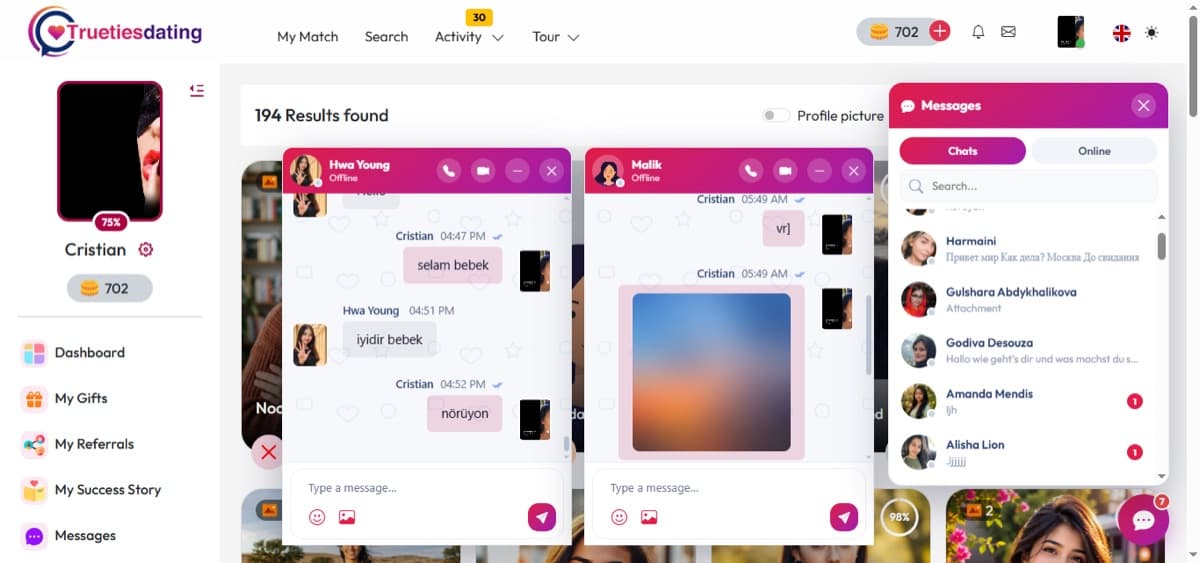
Based on what founders actually ask for during implementation, request frequency tends to run in roughly this order: AI matching, video profiles, identity verification, subscription tiers, compatibility quizzes, voice chat, AI dating assistant, and virtual gifts. AI matching and verification usually sit at the top, not because they're trendy, but because users increasingly expect a platform to filter for both compatibility and authenticity before they'll spend real time on it.
What Helps Reduce Launch Cost?
The founders who keep dating startup expenses under control tend to make the same handful of choices. They start with ready-made or white-label software. They launch an MVP instead of a full feature set. They use cloud hosting instead of owned infrastructure. They prioritize features based on what users actually ask for after launch, and they customize in stages instead of all at once. Nikolas Brooten put it simply after buying a script on Best Dating Scripts to test an idea with barely any coding experience. What started as an experiment turned into a real business, mostly because the low upfront cost meant he could test the idea before it needed to be perfect.
More Blog: MVP Dating App: What You Need and What to Skip
Common Budget Mistakes We See Founders Repeat
The same mistakes show up again and again. Trying to build every feature into version one instead of learning from real users first. Treating marketing as something to figure out after launch. Choosing a tech stack because it sounds impressive rather than because it fits the timeline. Skipping moderation tools to save money early. Having no maintenance plan once the platform is actually live. App store account requirements get underestimated more often than founders expect too. Verification, review timelines, and compliance steps can quietly add weeks to a launch that otherwise looked ready to go.
The founders who avoid these mistakes usually share one habit. They launch sooner than feels comfortable. Samantha T., a first-time founder, has talked about how overwhelming the idea of launching felt at first until she found a script on Best Dating Scripts teexpect,tched her vision, and got live in under a week with help from the support team. That's the opposite of trying to perfect version one before anyone sees it, and it's usually the faster way to find out what your users actually want.
Quick Launch Budget Checklist
- Software and customization
- Mobile app builds (iOS and Android)
- Cloud hosting and infrastructure
- Payment gateway integration
- Marketing and user acquisition
- Legal and compliance review
- Ongoing support and maintenance
- Security and analytics tooling
Conclusion
The honest answer to "how much does a dating startup cost to launch" is that it depends on decisions you haven't made yet: custom versus ready-made, niche versus mass-market, MVP versus full feature set. What successful founders tend to have in common isn't a bigger budget. It's a budget planned around their actual business goals instead of a number pulled from a generic search result. If you're weighing those decisions for your own platform, understanding how dating platforms actually make money is a good next step before locking anything in. And if a ready-made starting point makes sense for where you are, it's worth exploring Best Dating Scripts' white-label platforms to see what's possible before committing to a full custom build.


