Five million Indian Americans live across the United States, and most of them are still finding life partners through WhatsApp forwards, aunties, and Facebook groups. That gap is the business opportunity. Generic dating apps don't understand caste, community, or family involvement, and India-based matrimony giants weren't built with US immigration status, time zones, or diaspora dating pools in mind.
If you're a founder, a local matchmaker going digital, or an agency thinking about a niche launch, this guide walks through the real decisions: who you're serving, what your platform needs, what it costs, and how you'll make money from it.
Why the US Indian Diaspora Is a Real Business Opportunity
The Indian American population sits at roughly 5.2 million people, making it the second-largest Asian-origin group in the country. That number has grown fast. Indian immigration to the US nearly doubled between 2010 and 2024, a pace well ahead of overall immigration growth.
This community also marries at high rates and values cultural compatibility in a partner. That combination, a large population, strong marriage intent, and weak existing digital options built specifically for them, is exactly the kind of gap a focused matrimonial platform can fill.
California and Texas hold the largest concentrations, with New Jersey, New York, and Illinois close behind. That geographic clustering matters. It tells you where to run your first ad campaigns and which regional languages or communities to prioritize at launch.
Who Exactly Are You Building For?
"NRI matrimony" isn't one audience. Getting specific here decides your feature list, your marketing, and your monetization model.
NRIs vs. Persons of Indian Origin
Non-resident Indians are recent movers, often on work or student visas, still closely tied to family back home. Persons of Indian origin are second- or third-generation, US-born, and culturally more American even while wanting an Indian partner. Each group searches, filters, and pays differently, so don't build one generic form and call it done.
Regional and Community Niches
Gujarati, Punjabi, Tamil, and Telugu communities each have their own matchmaking customs, and Muslim, Christian, and Jain Indian Americans often want a platform that respects specific religious practices. A platform like a Nikah Forever-style Muslim matrimony site works because it doesn't try to be everything to everyone. Pick a niche you understand well and expand later.
What Should Your NRI Matrimonial Platform Include?
Feature lists matter less than what those features solve for. Three things earn trust with this audience faster than anything else.
Verification and Trust
Fake profiles and catfishing are the top complaint across matrimony platforms, NRI or otherwise. ID verification, phone and email confirmation, and optional video verification aren't nice extras, they're what convince a skeptical parent to let their daughter or son use your site at all.
Family-Managed Profiles
Many Indian families, especially first-generation immigrants, still expect a parent or relative to manage or co-manage a profile. Building that option in from day one, rather than bolting it on later, saves you a painful redesign.
A Compatibility Layer That Isn't Just a Filter
The broader matchmaking market is expected to reach $15.35 billion by 2030, driven partly by AI-based matching that goes beyond simple filters for religion, caste, or income. You don't need a data science team to start. Even a basic weighted-scoring system on values, lifestyle, and family expectations puts you ahead of platforms that only offer dropdown filters.
How Much Does It Cost to Build an Indian Matrimonial Website in the USA?
A fully custom build, hiring developers, designers, and a project manager, typically runs anywhere from $25,000 to over $80,000, plus three to six months before launch. That budget works if you have funding and a precise technical vision.
For most first-time founders, a ready-made matrimonial script is the faster and cheaper path. You're paying for a proven codebase covering profiles, search, messaging, and payments, then customizing branding and niche-specific fields on top. Before committing, it's worth checking a live script demo so you know exactly what you're buying.
To Delve Deeper Into This Topic, Visit Our Blog: Matrimony Website Development Cost 2026: Pricing Guide
How Do NRI Matrimonial Platforms Make Money?
Free registration with paid contact access is still the most common model in this space. Users browse for free, then pay to message or view contact details of a match.
Premium memberships add extra filters, priority placement, or unlimited messaging. Assisted matchmaking, where your team or algorithm suggests matches directly, commands a much higher price point and works well for a boutique or agency-style launch. Many successful platforms combine two or three of these rather than picking just one.
What Legal and Compliance Factors Matter for a US-Based Matrimonial Site?
You'll need a registered US business entity (an LLC is standard for most early-stage founders) and a merchant account that supports recurring subscription billing, since many payment processors flag dating and matrimony sites for extra review.
Data privacy is non-negotiable. Profiles contain sensitive personal and family information, so you need a clear privacy policy, secure storage, and a way for users to delete their data on request, especially if you plan to serve users in California under its state privacy law.
How Long Does It Take to Launch a Matrimonial Website?
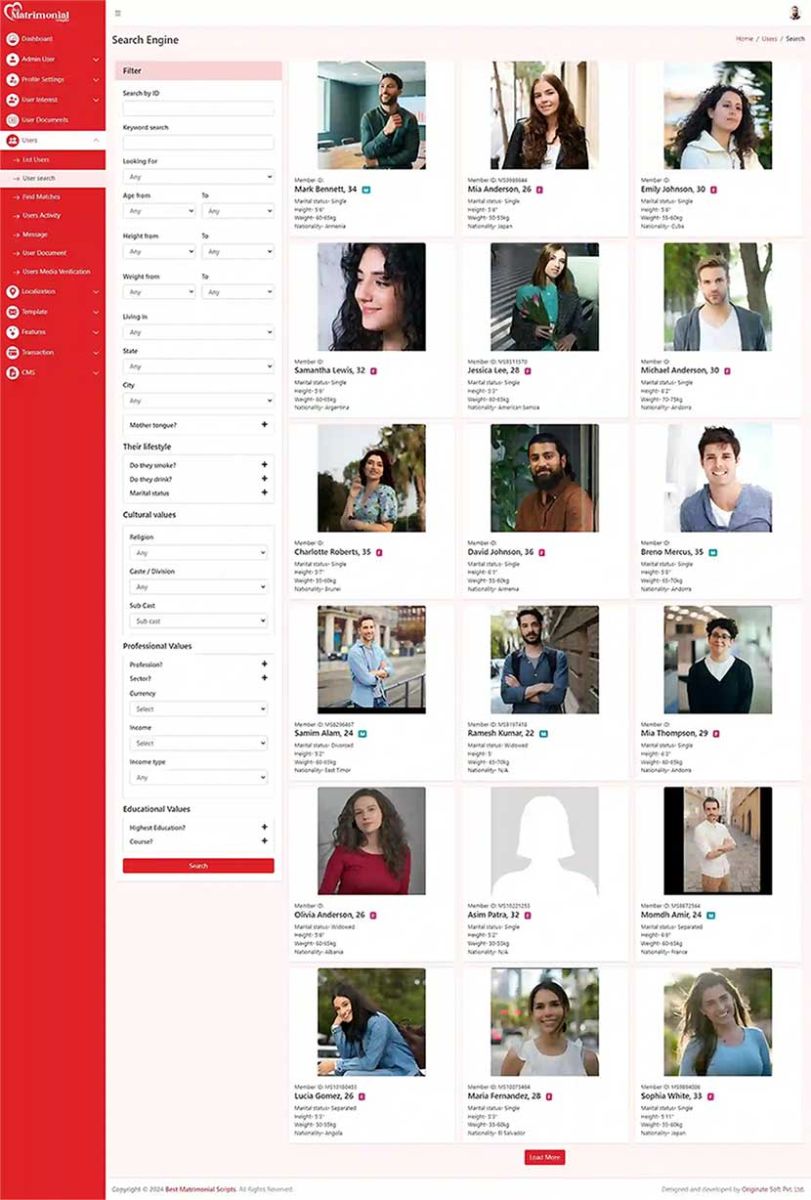
With a ready-made script, most founders go from signed contract to live site in three to six weeks, depending on how much custom branding and niche-specific fields you want. A fully custom build stretches that timeline to several months, since every feature gets built from scratch instead of configured.
How Do You Stand Out in a Crowded NRI Matrimony Market?
Don't compete with Shaadi.com or BharatMatrimony on scale, you'll lose. Compete on specificity. A platform built only for Gujarati families in New Jersey, or only for Indian Muslim professionals in Texas, can out-market a generalist site because every piece of your messaging speaks directly to one community's expectations.
Word of mouth inside tight-knit diaspora communities, temple or mosque partnerships, and local community event sponsorships tend to outperform generic digital ads for this audience, at least in the first year.
Getting Started
Starting a matrimonial website for the Indian community in the USA isn't about copying Shaadi.com. It's about picking a specific slice of a five-million-person community that generic platforms are underserving, then building trust features and a monetization model suited to how that community behaves day to day.
Best Dating Scripts offers a ready-made matrimonial script built for exactly this kind of niche launch, and you can request a free demo to see how it fits your specific community before committing to anything. The NRI matrimony market isn't getting any smaller, and the founders who move now, with a focused audience and the right groundwork, are the ones who'll own it.


